"Amazing experience from start to finish! Everything was very well organized, the staff were friendly, professional and made sure we enjoyed every moment. The activity was even better than we expected and we had a fantastic time. Definitely one of the highlights of our trip. Highly recommended!"
Puerto del Carmen · Puerto Calero · Playa Blanca
Lanzarote Dolphin Tours — Wild Dolphin Watching by Boat
Bottlenose dolphins, Atlantic spotted dolphins and short-finned pilot whales live off Lanzarote's south coast all year. Compare every boat that goes looking for them — sunset catamarans, an all-electric eco-catamaran, and fast marine-safari speedboats.
From
$61
per person
Free cancellation
- 4.2 / 5 3,226+ Reviews
- 2 hours Duration
- 3+ Species Resident Year-Round
- Hotel Pickup From 17 Points
- Free Cancellation
The Experience
Why Book This Sunset Dolphin Cruise
The most-reviewed dolphin-watching trip on the island — and what it actually includes.
Highlights
- Enjoy stunning sunset views over the Puerto del Carmen coastline
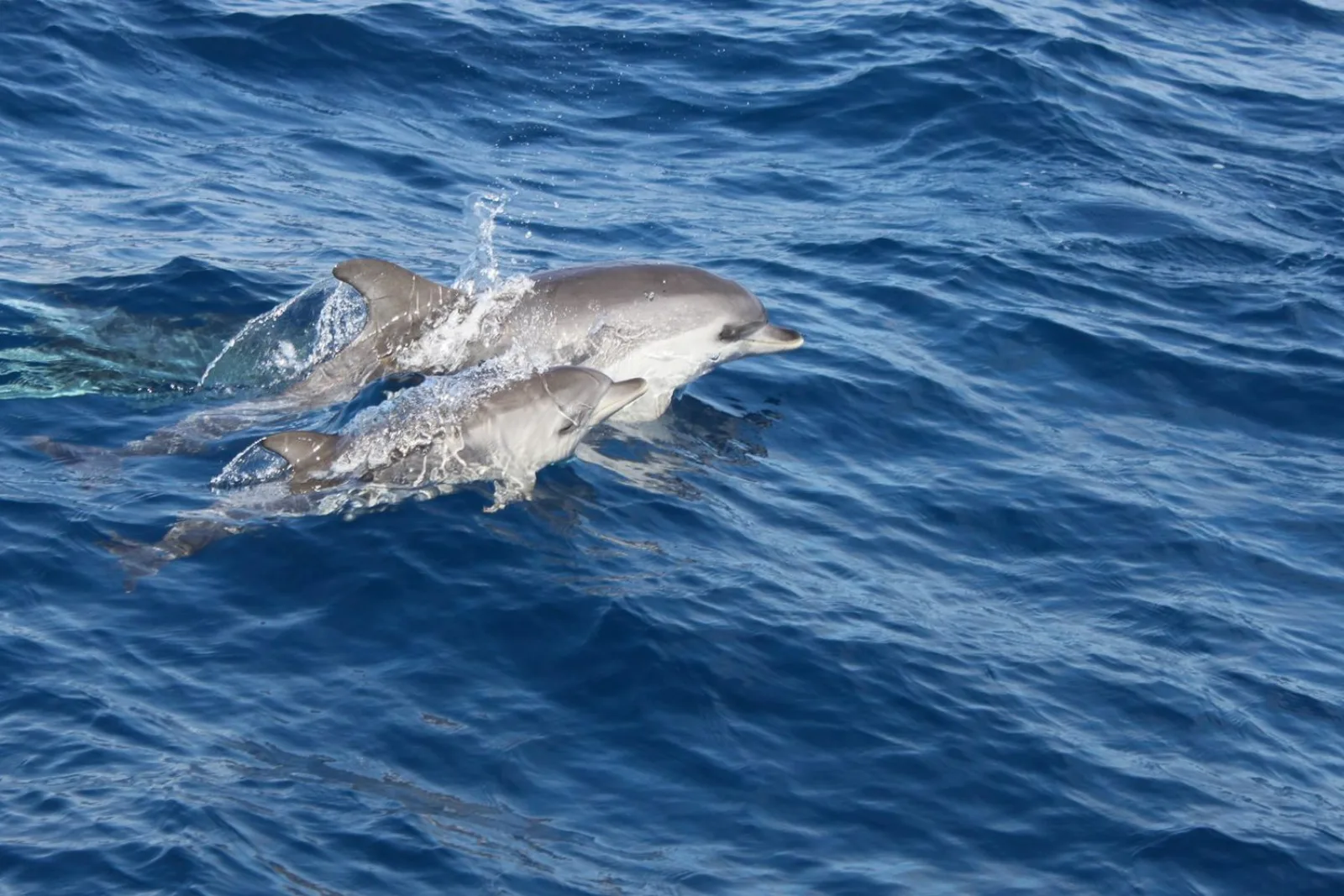
- Keep an eye out for wild dolphins in their natural habitat
- Enjoy a complimentary mojito, beer, wine, or soft drink
- Receive an individual snack box
- Meet friendly, experienced guides
What's Included
- Return transfer from pick-up point
- Welcome mojito
- One complimentary drink
- Snack box
Book Your Experience
Check Availability & Prices
Select your preferred date and time. Instant confirmation — free cancellation up to 24 hours before departure.
How Booking Works
Four steps from browsing to boarding.
Pick Your Boat Type
Sunset catamaran, all-electric eco-catamaran, or fast marine-safari speedboat. Each looks for dolphins differently — the comparison table below breaks down what actually changes.
Choose Your Date
Use the availability calendar to see live departures. Sailings run year-round from Lanzarote's south coast; afternoon and sunset slots book out fastest between June and September.
Book with Free Cancellation
Reserve in a couple of minutes and pay online. Most trips can be cancelled free up to 24 hours ahead — worth having, because Atlantic swell does move departures.
Meet at the Harbour
Show your mobile voucher at the pier — or get collected, if you booked a trip with hotel transfers from Puerto del Carmen, Playa Blanca, Costa Teguise or Arrecife.
How It Actually Works
What a Lanzarote Dolphin Trip Actually Looks Like
Here is the part most first-timers get wrong: the boat is not allowed to drive up to the dolphins. Canary Islands law keeps every licensed boat 60 metres back and requires the propellers to stop once animals come within 100 metres — so the pod approaches you, or it doesn't. Here is how the afternoon actually unfolds.
- Pickup, or straight to the harbour — If you booked a trip with transfers, a minibus collects you from one of seventeen points across Puerto del Carmen, Playa Blanca, Costa Teguise and Arrecife. Otherwise you make your own way to the pier — Puerto del Carmen and Puerto Calero are the two main departure marinas.
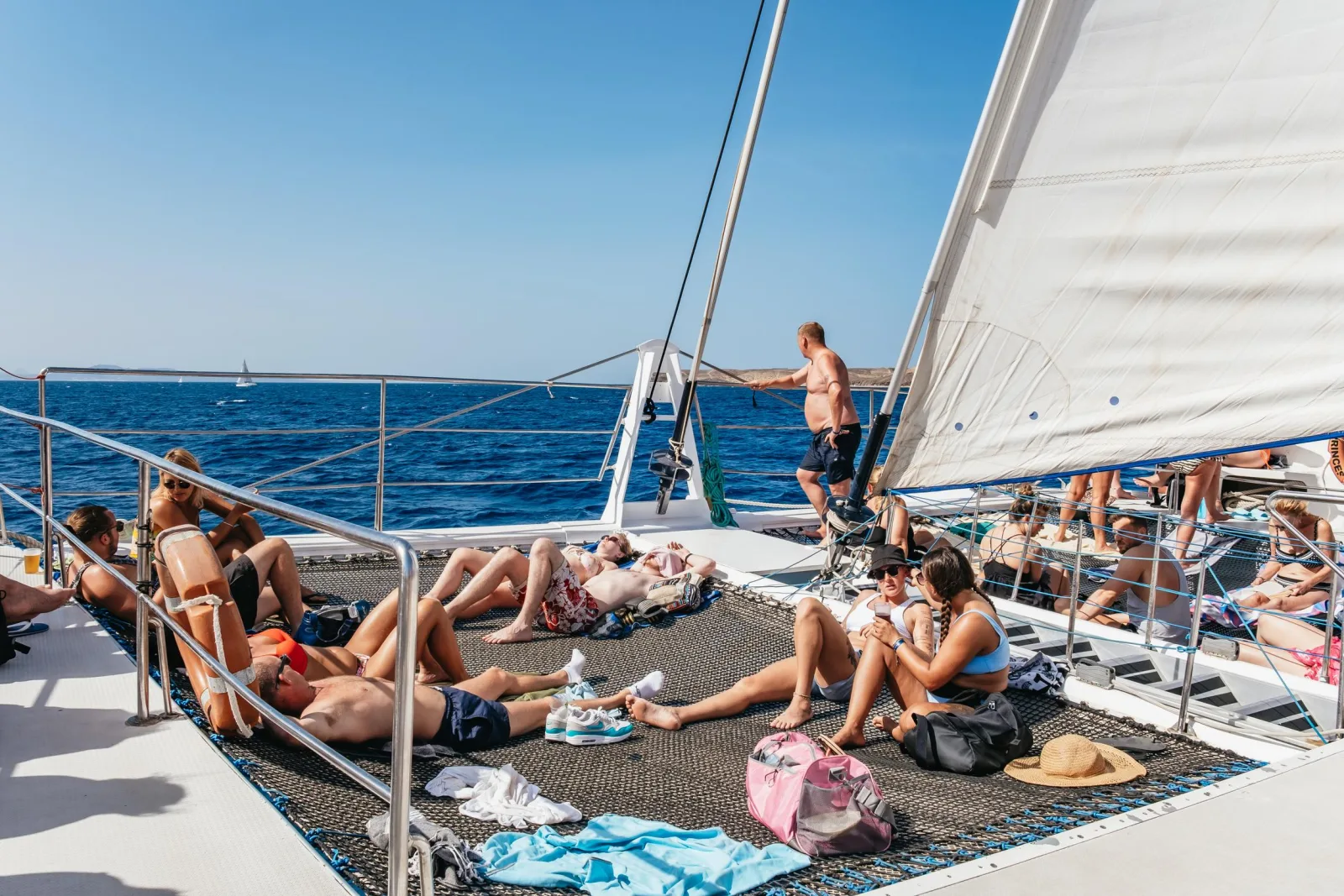
- Boarding and the safety briefing — Crews board 15–20 minutes before departure. This is where the guide sets expectations honestly: sightings run around 60–65% across the year, and nobody promises you anything. Grab a seat on the bow nets or in the shade before they fill.
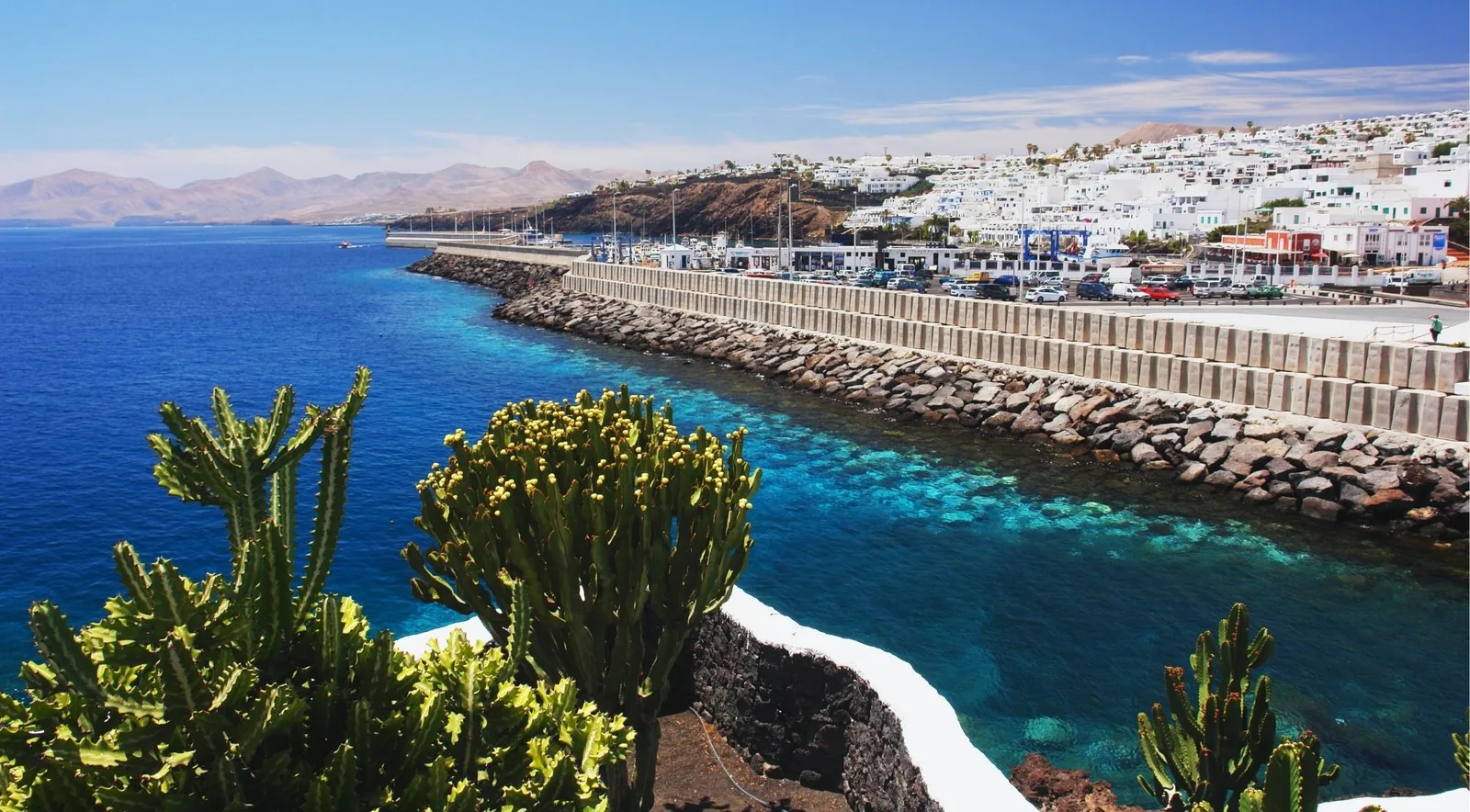
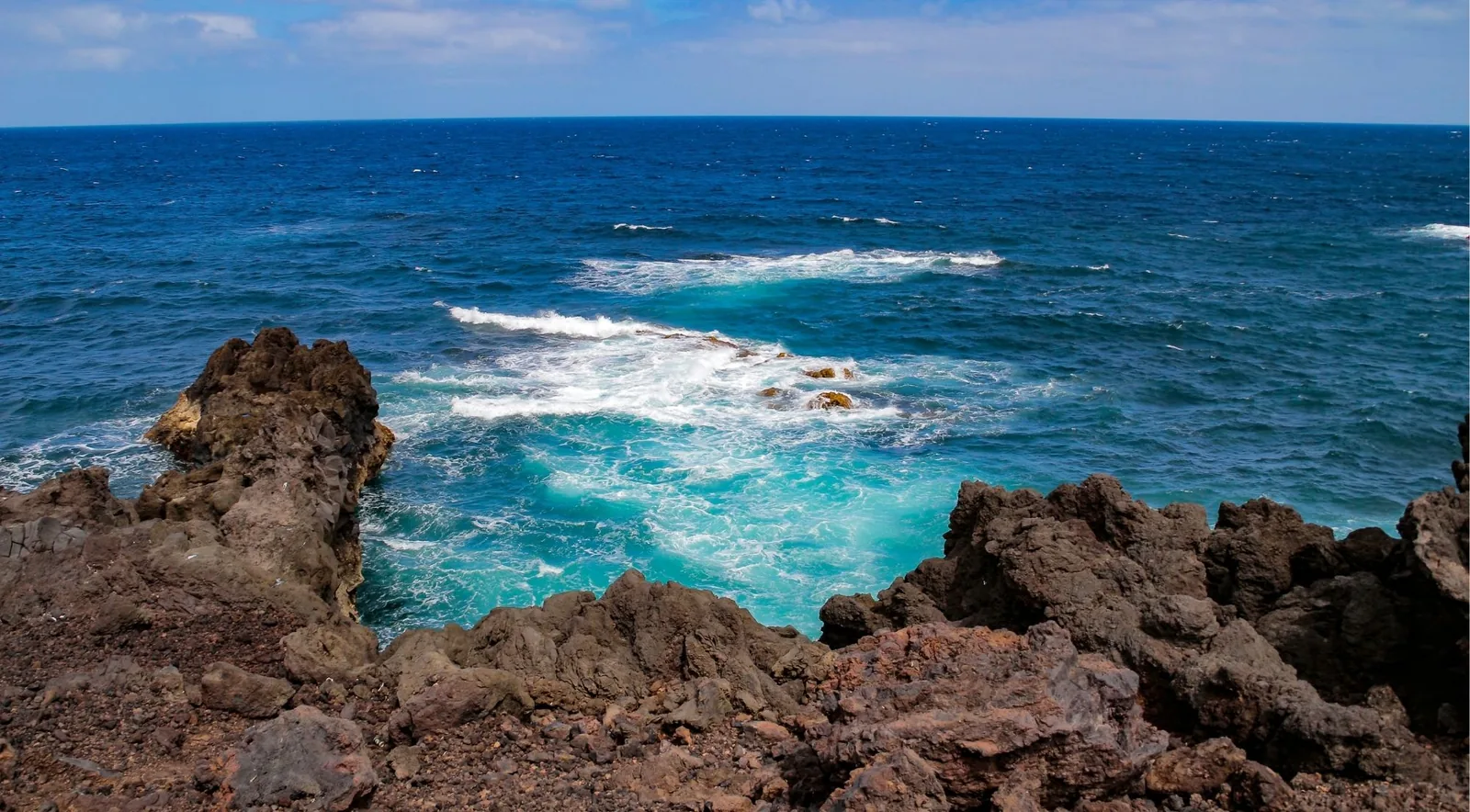
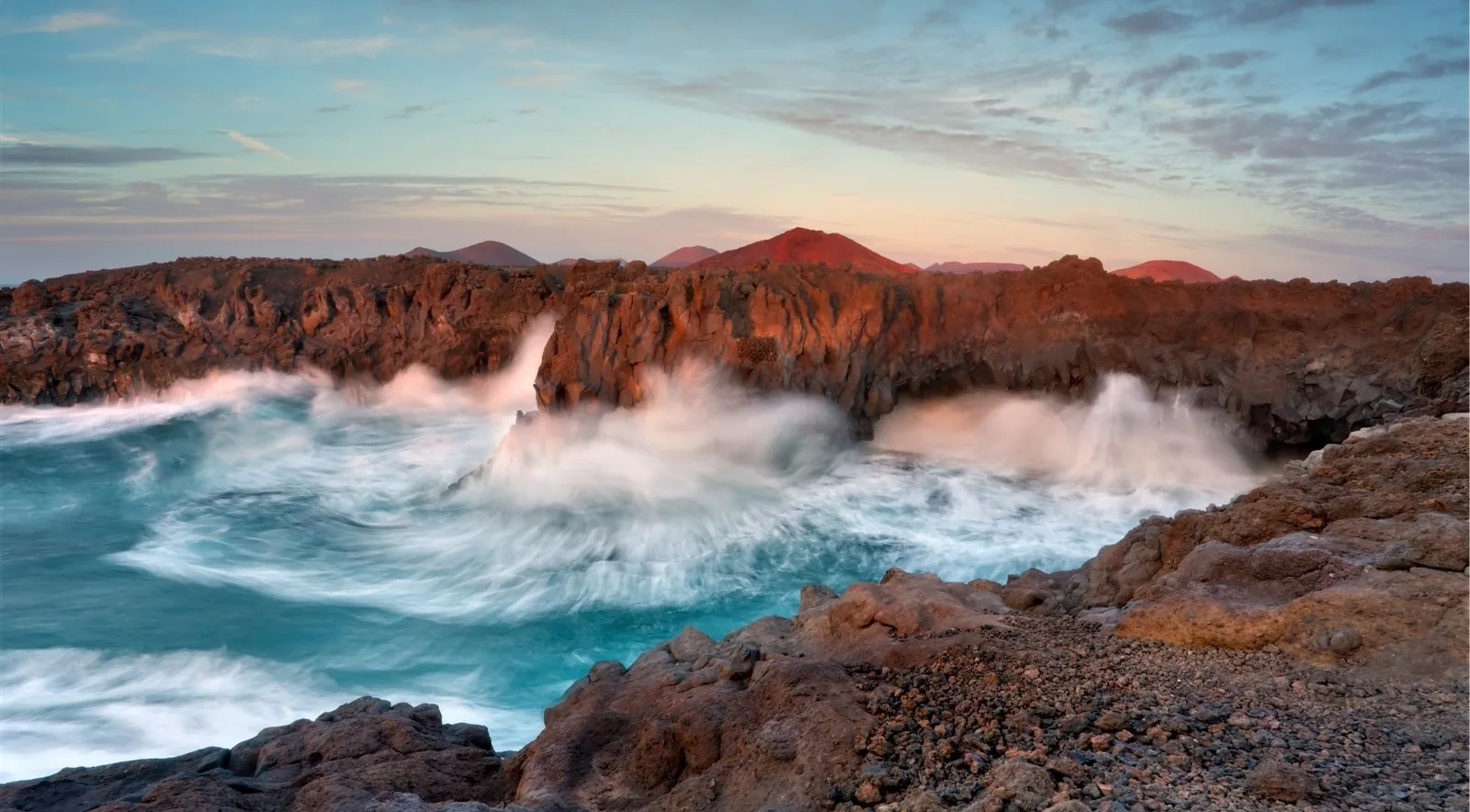
- Out along the volcanic coast — The first stretch is pure coastline — black lava cliffs dropping into deep blue water, the Ajaches massif to the south. The water gets deep fast here, which is exactly why the dolphins are close in.
- The search — and the 60-metre rule — Crew and passengers scan together. When a pod is spotted the skipper approaches slowly, then cuts the engines and drifts. Boats must stay 60 metres off, stop propellers inside 100 metres, and limit how long they stay. Bring binoculars or a zoom lens — 60 metres is further than it sounds.
- Drinks, and the light going gold — On the sunset sailings the return leg is the point: a mojito or a beer, a snack box, and the sun dropping behind the island while the boat runs back to port. Even on a blank afternoon, this is the part people write the good reviews about.
Can't Make These Dates?
Browse More Available Options
Find a tour that fits your schedule — all with instant confirmation and free cancellation.
Photo Gallery
Out on the Water
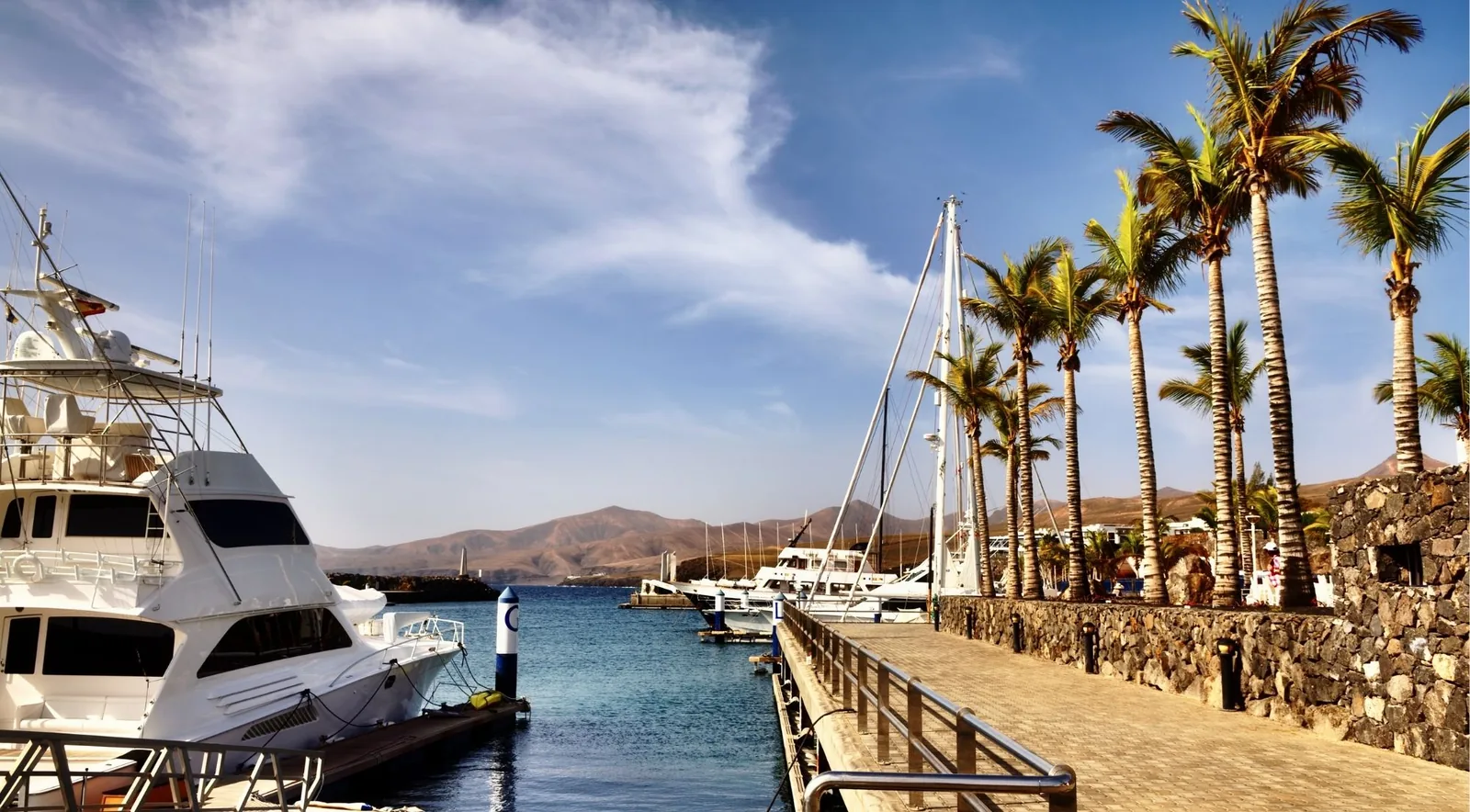
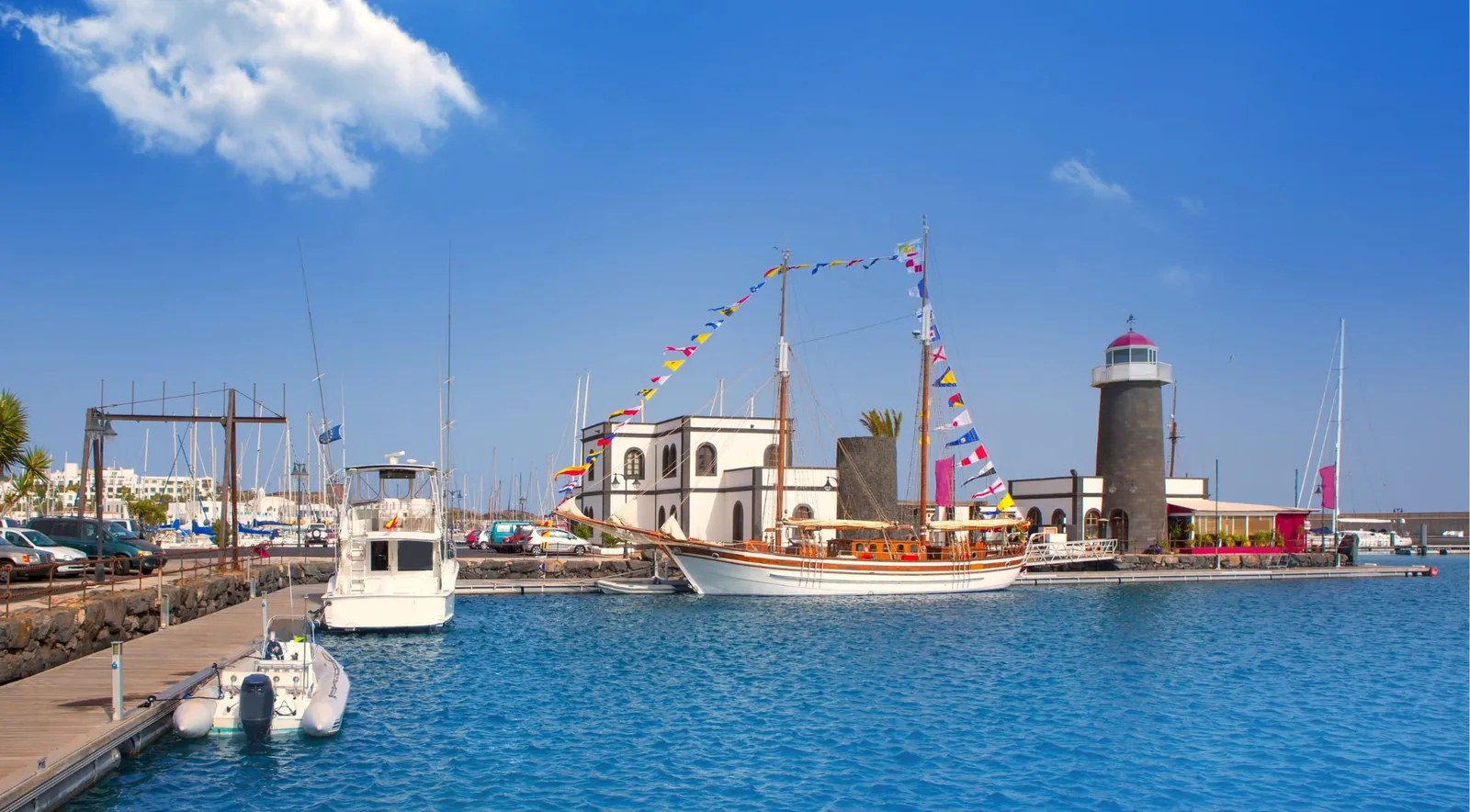
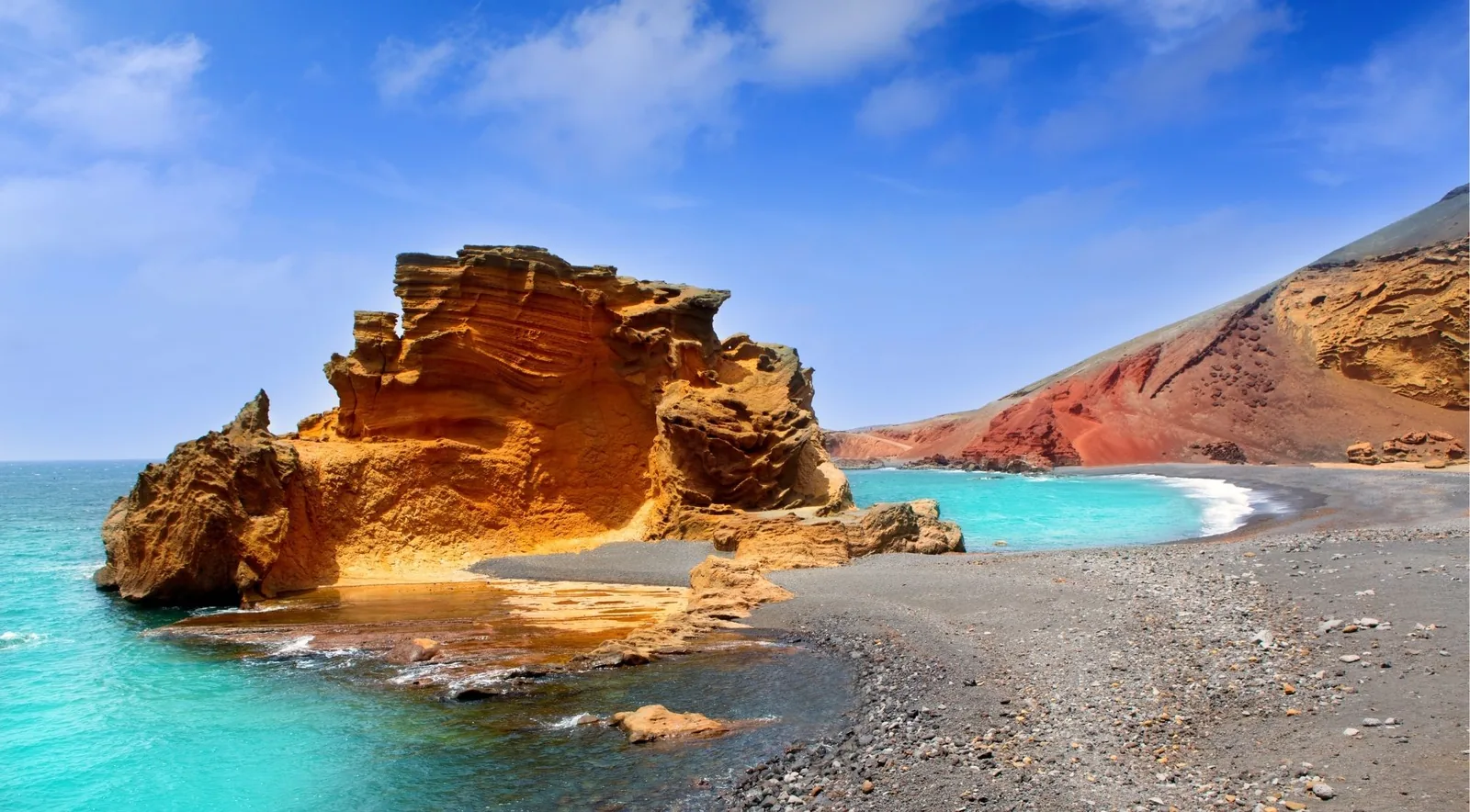
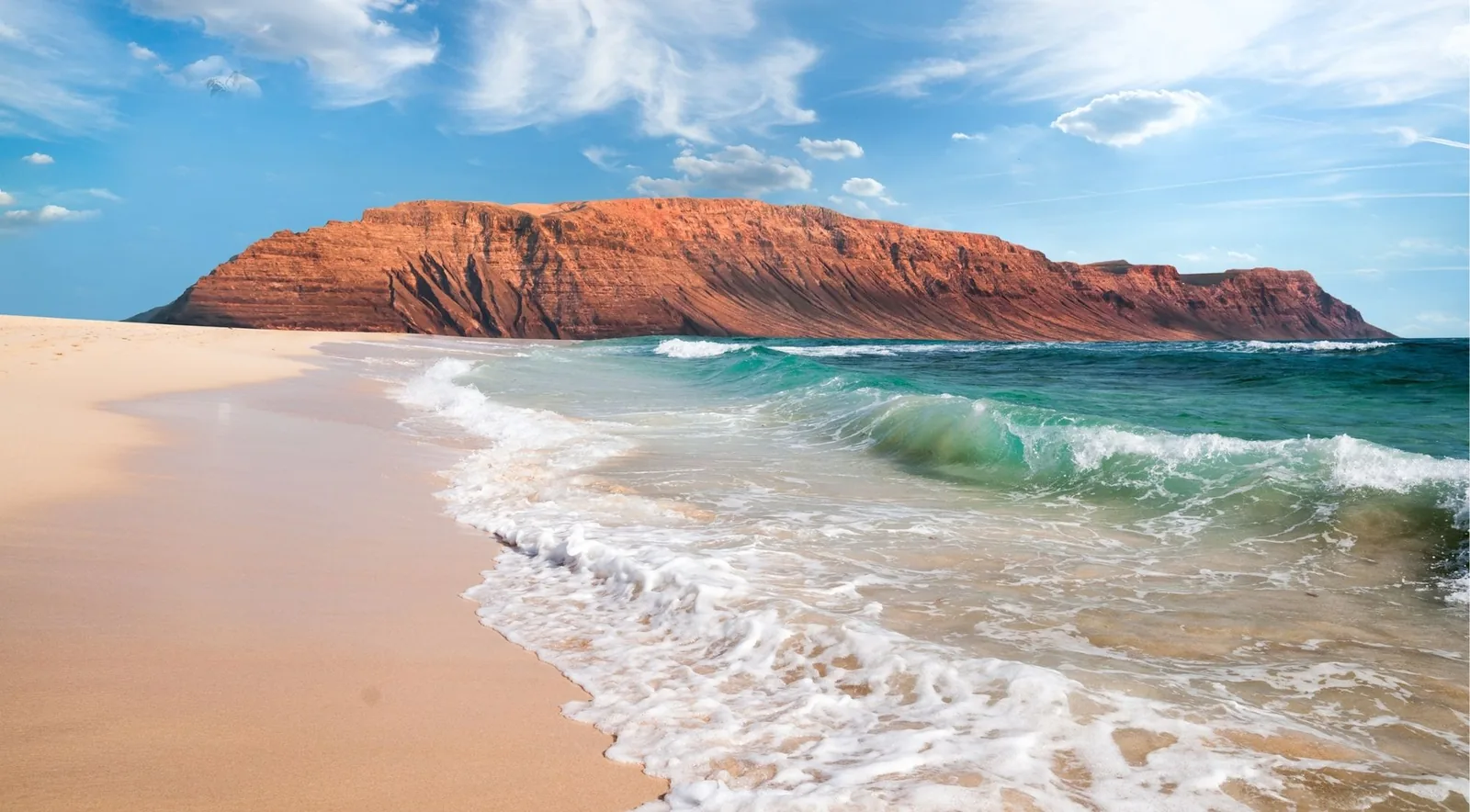
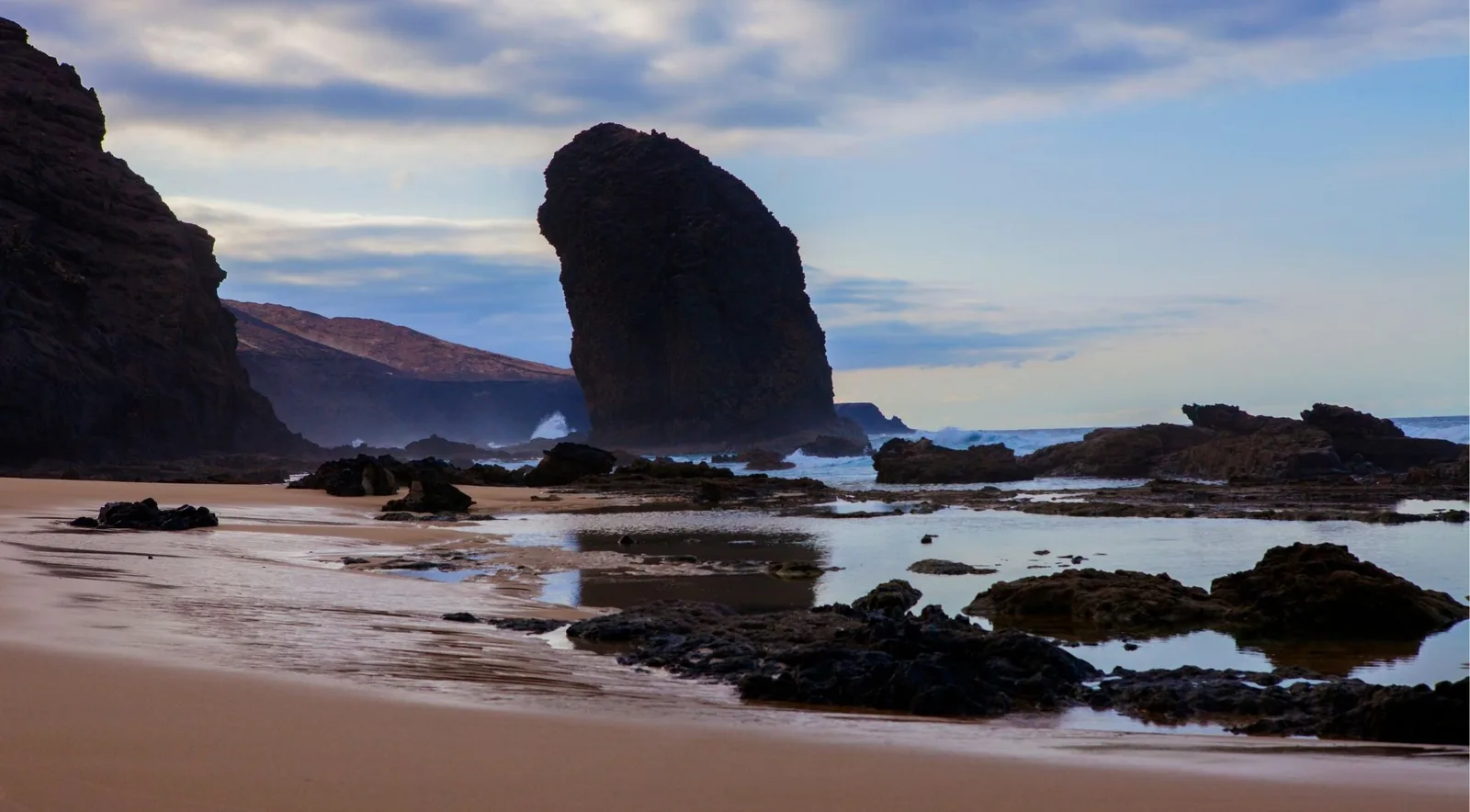
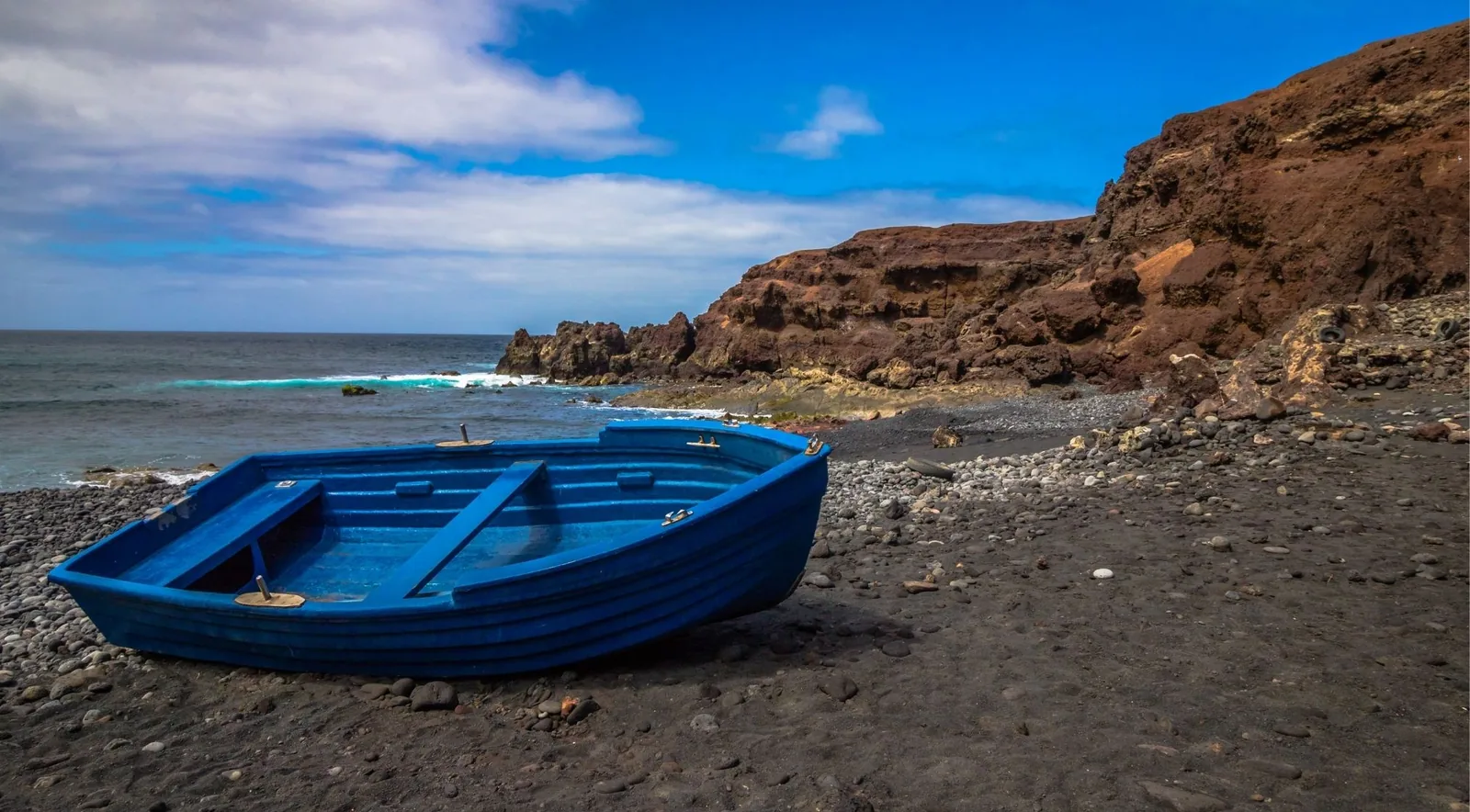
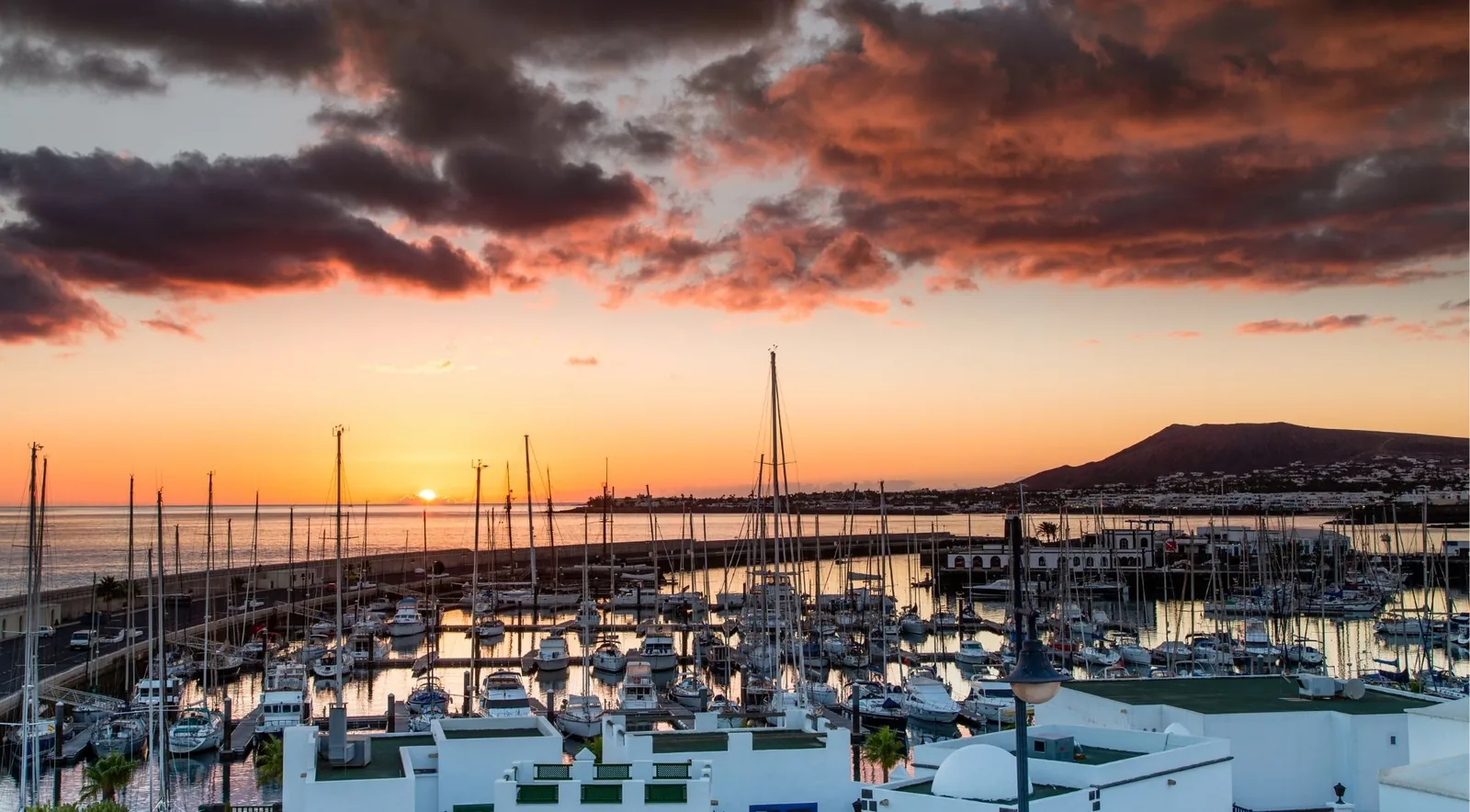
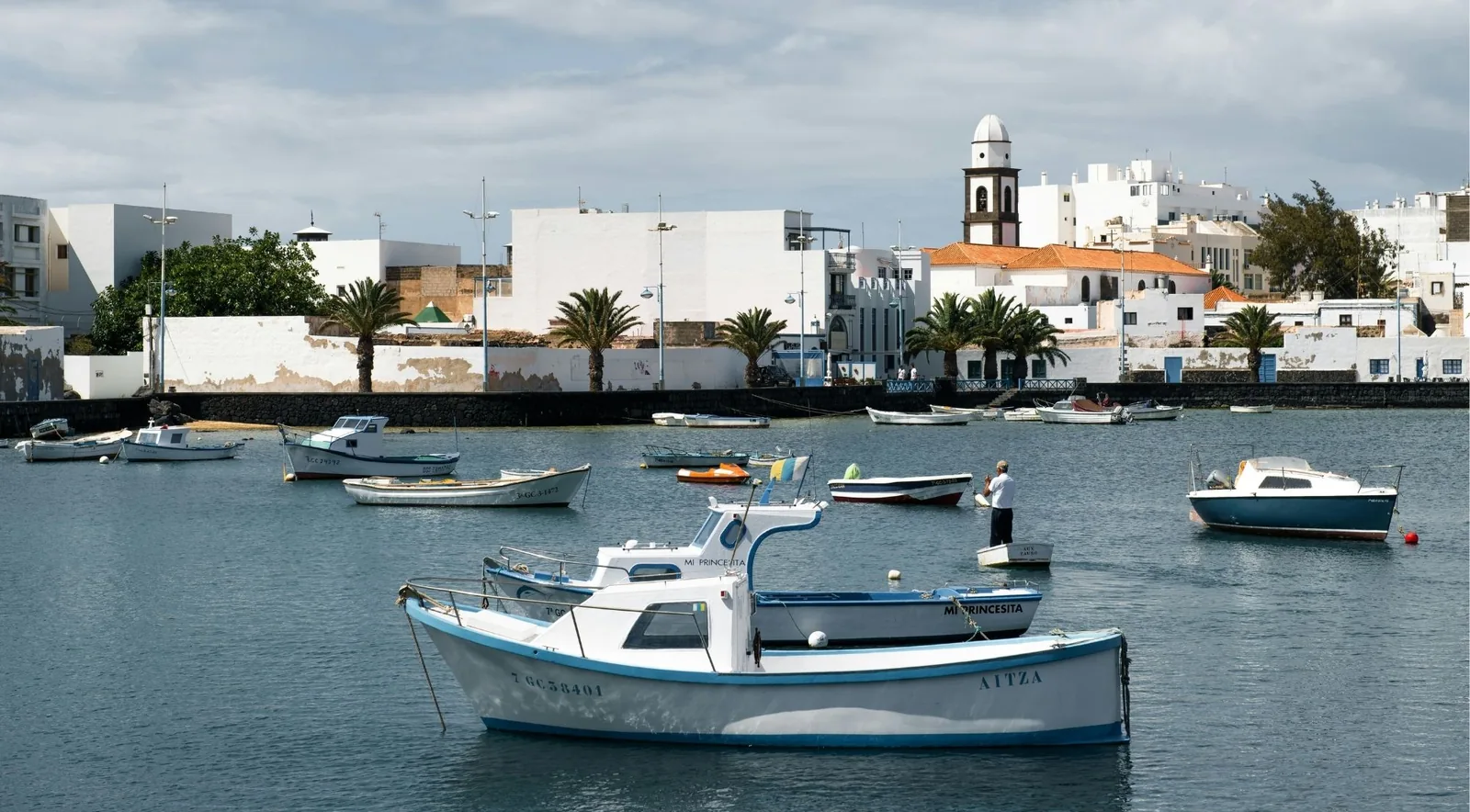
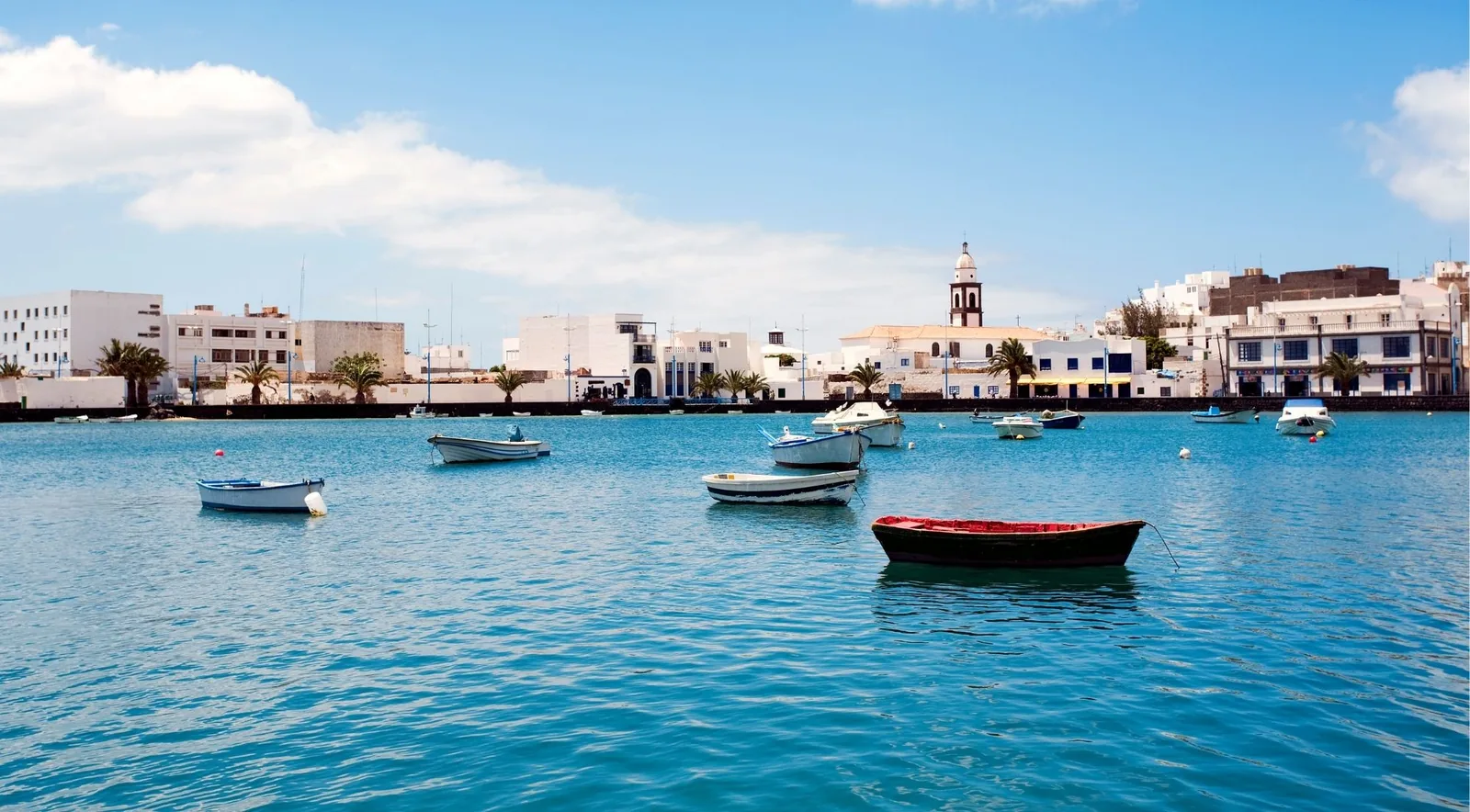
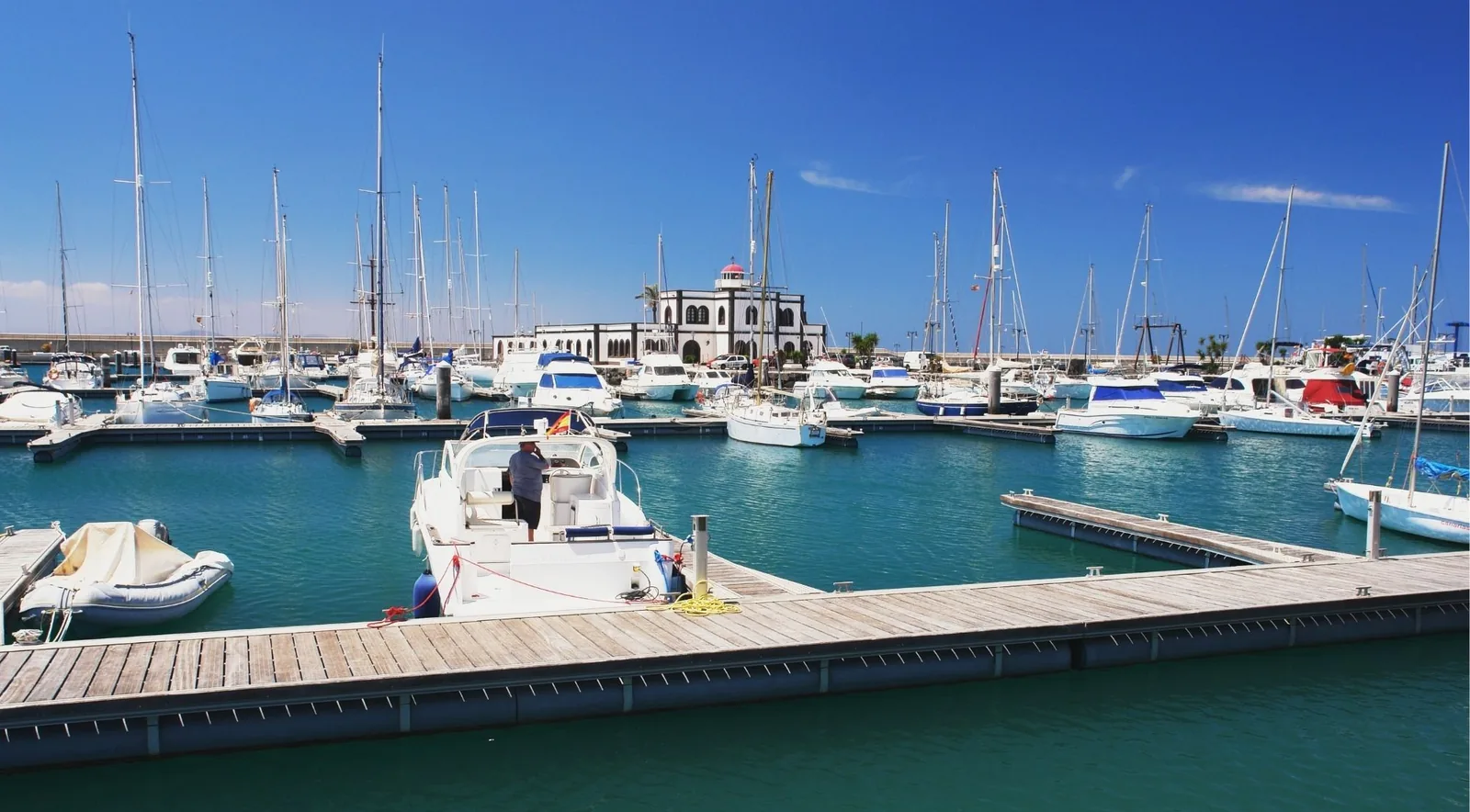
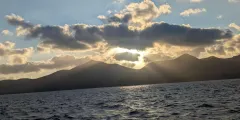
Lanzarote's south coast, its volcanic shoreline, and the Atlantic these boats cross.
Sunset Catamaran vs Speedboat vs Watching from Shore
Three ways to look for dolphins off Lanzarote's south coast — and what actually changes between them.
| Feature | MOST BOOKED Sunset Catamaran Cruise | Marine-Safari Speedboat | Watching from the Shore |
|---|---|---|---|
| What It Is | A 2–2.5 hour cruise along the Puerto del Carmen coast at golden hour, with a dolphin search built in | A fast, small-group run offshore to cover more water in less time | Scanning the sea from a clifftop or beach on the south coast |
| Realistic Sighting Odds | Around 60–65% across the year, in line with the island average | Around 60–65% — more water covered, but less time drifting | Very low. Dolphins here work deep water close to shore, not the surf line |
| Stability & Sea Sickness | ✓ Twin hulls — the steadiest option in Atlantic swell | Bouncy by design. Not the pick if you are prone to motion sickness | ✓ You are on land |
| Best For | Families, couples, anyone who wants the sunset as much as the dolphins | Photographers and anyone who wants maximum time in open water | A free look while you are already at the coast |
| Hotel Transfers | ✓ Included on the featured cruise — 17 pickup points island-wide | Usually not — you make your own way to the harbour | Not applicable |
| Drinks & Snacks | ✓ Welcome mojito, one drink, and a snack box included | Rarely included — check the individual listing | Whatever you carried down |
| Free Cancellation | ✓ Up to 24 hours before departure | ✓ Up to 24 hours on most listings | Not applicable |
| Starting Price | From $61 per person | From $75 per person | Free |
| Check Dates | View Options |
More Options
Other Lanzarote Dolphin & Boat Trips
Different boats, different departure ports, different budgets — all with free cancellation.
 LOWEST PRICE
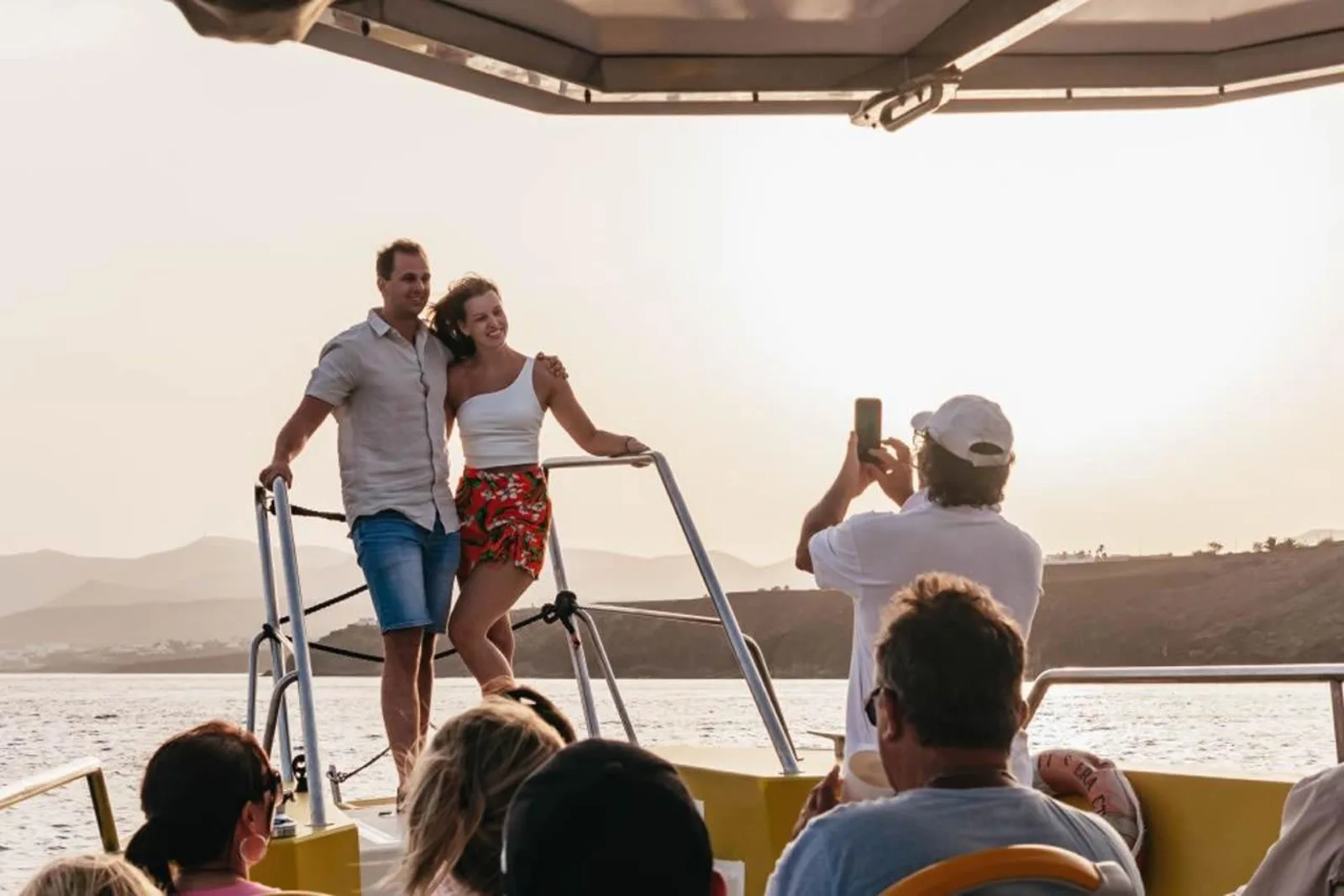
Lanzarote: 2.5-Hour Sunset and Dolphins Cruise
A 2.5-hour sunset dolphin search aboard a fast boat from Puerto del Carmen old harbour, with hotel pickup, expert commentary and sparkling wine and pastries as the sun goes down. The cheapest dolphin trip on the island.
 SPEEDBOAT SAFARI
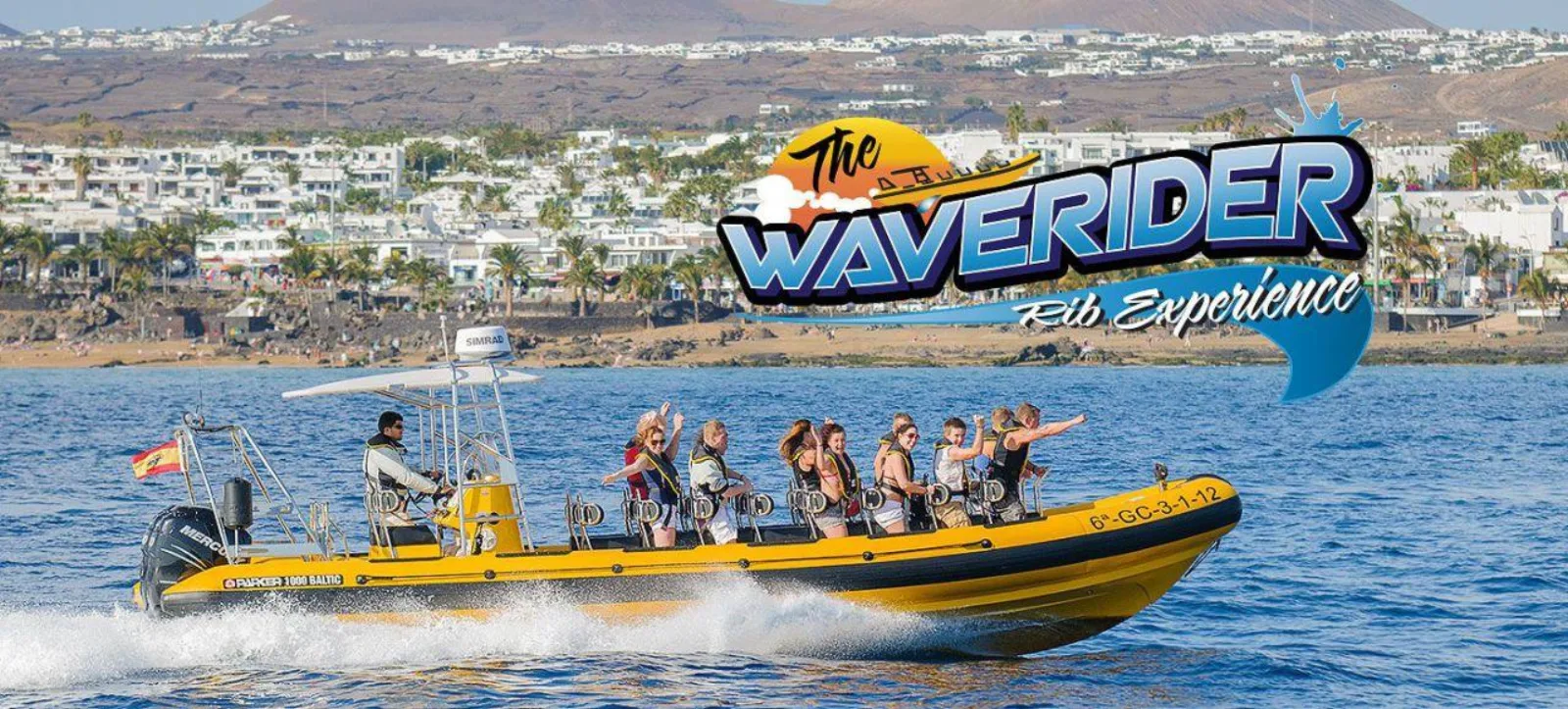
Lanzarote: Dolphin Watching by speedboat
A fast RIB marine safari from Puerto del Carmen's Old Cruise Port, capped at 12 passengers — the smallest-group and most agile way to look for dolphins, turtles and seabirds off Lanzarote's south coast.
 BEACH DAY
Lanzarote: Day Trip to the Papagayo Beaches by Catamaran
A four-hour catamaran cruise down Lanzarote's volcanic south coast to the golden Papagayo beaches, with an open bar, paella lunch, kayaks and a swim and snorkel stop — and dolphins regularly sighted on the way.
 HALF DAY + LOBOS
Lanzarote: Lobos Island Half-Day Dolphin Watching Trip
A 5.5-hour trip that combines the island's dolphin route with a landing on uninhabited Lobos Island — 1.5 hours at sea each way looking for cetaceans, and 2.5 hours free on the island with a picnic lunch included.
 TOP RATED
Lanzarote: Whale and Dolphin Watching Eco-Friendly Catamaran
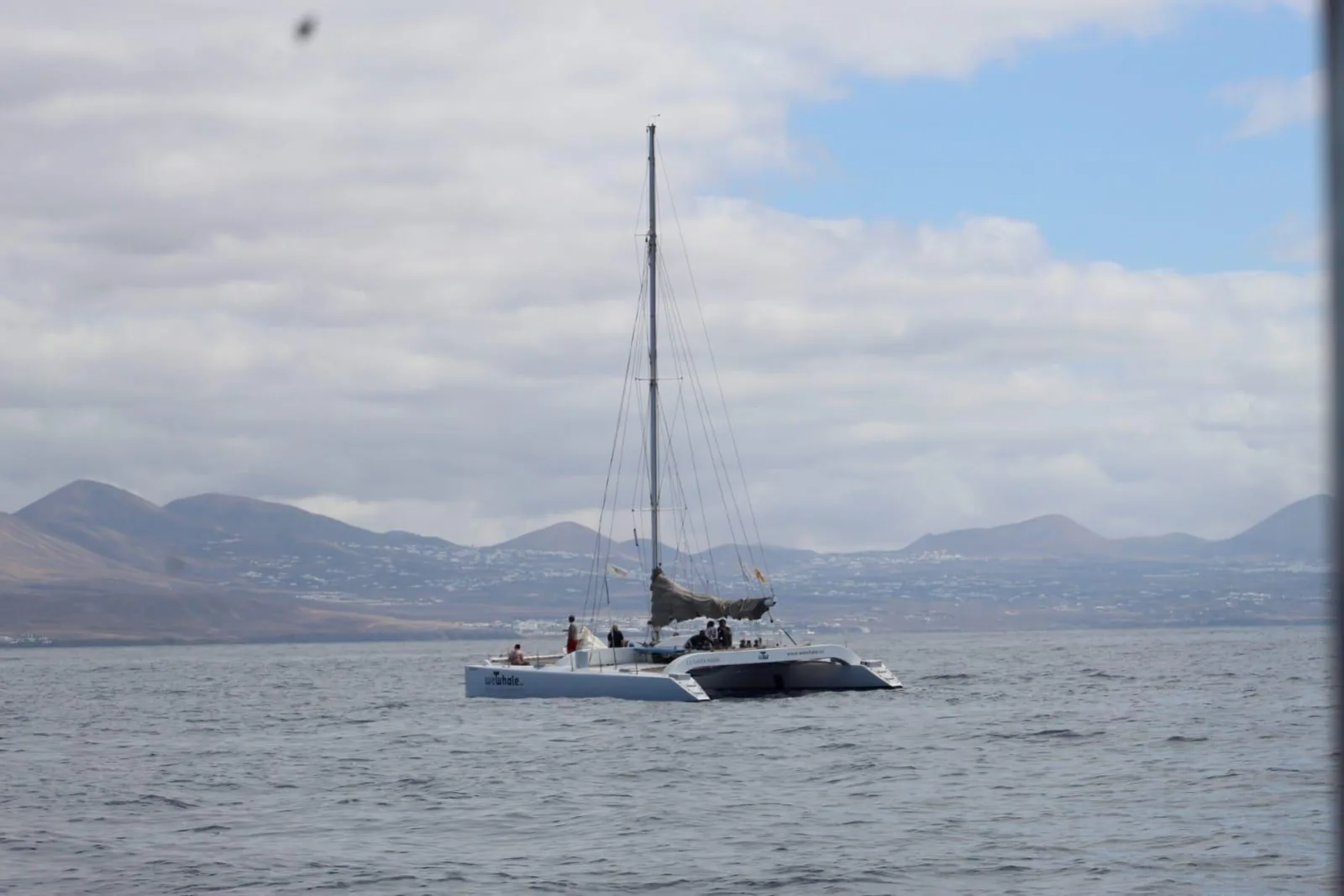
Four hours aboard the Canary Islands' first fully electric, emission-free catamaran — silent, wake-free whale and dolphin watching from Puerto Calero, with an onboard hydrophone to listen to the animals underwater.
Before You Book
What Dolphin Watching in Lanzarote Is Actually Like
The species, the real odds, the rules every legal boat has to follow — and how to pick the trip that matches what you want out of the afternoon.
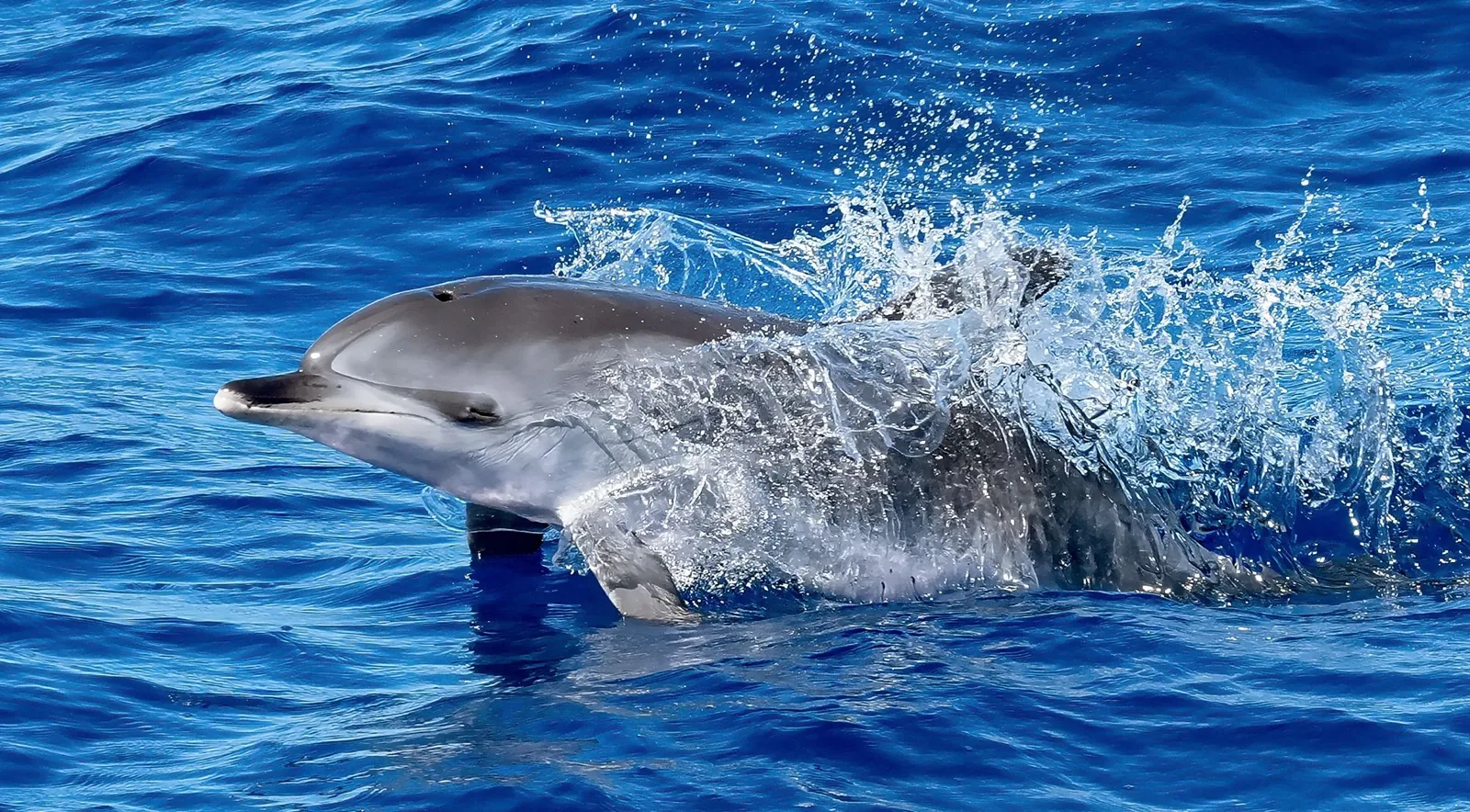
Dolphin watching in Lanzarote is one of those experiences where the marketing and the reality sit slightly apart, and the gap is worth understanding before you spend money on it. Every operator on the island sells the same photograph: a bottlenose dolphin arcing out of a cobalt Atlantic, a catamaran in soft focus behind it. That photograph is real. It is also the good day. This page is about how often the good day happens, what the law says the boat may and may not do when it finds a pod, and which of the trips departing Lanzarote’s south coast suits which kind of traveller.
The animals you are actually going out to see
The Canary Islands sit on one of the richest stretches of cetacean water anywhere on earth — at least thirty species have been recorded across the archipelago, helped by very deep water very close to shore, a stable sea temperature of roughly 18–25 °C, and the fish that follow both. Lanzarote is at the northeastern edge of that system, and three species account for the large majority of what tourist boats encounter here.
The bottlenose dolphin (Tursiops truncatus) is the one most people picture and the one most often seen: large, curious, and inclined to ride the pressure wave off a moving bow. The Atlantic spotted dolphin (Stenella frontalis) is smaller, travels in bigger and more energetic groups, and is the species most likely to produce the leaping, splashing display that ends up on an operator’s homepage. The third regular is not a dolphin at all in the everyday sense — the short-finned pilot whale (Globicephala macrorhynchus) is a large member of the dolphin family, dark and blunt-headed, and it behaves completely differently: pilot whales tend to log quietly at the surface in family groups rather than charge the boat.
Beyond those three, Lanzarote’s waters occasionally produce common dolphins, striped dolphins, rough-toothed dolphins, Risso’s dolphins, beaked whales, and — rarely, and usually well offshore — sperm whales and larger baleen whales. Nobody should book on the strength of the rare list. Book on the strength of the three regulars.
The honest odds, and why no operator will promise you a sighting
Read the fine print on any Lanzarote boat trip and you will find some version of the same sentence. The trip we feature above puts it plainly: dolphin sightings are not guaranteed; dolphins are wild, free-roaming animals, and sightings depend on weather, sea conditions, and animal behaviour. There are no refunds for a blank afternoon. Every operator on this page says the same thing in their own words, and they are not hedging for the sake of it.
What crews and local guides consistently report is a sighting rate in the region of 60–65% across the year — good odds by wildlife-watching standards, and far better than most whale-watching destinations manage, but not a certainty and not sold as one. Treat that number as the shape of the thing rather than a precise figure: it comes from operators describing their own trips, not from an independent survey. Roughly one trip in three comes back without a dolphin. Our guide to how likely you are to see dolphins covers what moves those odds and what happens after a blank trip.
That reframing matters, because it changes how you should choose. If a sighting is the only thing you are buying, the odds are against your one afternoon being the memorable one. If you are buying two hours on the Atlantic at sunset with a drink in your hand, off a coastline of black volcanic cliffs, and a good chance of dolphins on top — you will almost certainly get your money’s worth. Nearly every genuinely enthusiastic review of these trips is written by somebody in the second category.
Barco Azul: the flag that tells you the boat is playing by the rules
This is the part almost nobody explains, and it is the single most useful thing to know before booking.
Cetacean watching in the Canary Islands is not a free-for-all. It is regulated by the Canary Islands Government under Decree 178/2000, and boats licensed to approach cetaceans for tourism carry a specific visual marker: the Barco Azul — “Blue Boat” — symbol, set into a yellow Canarian flag roughly 80 × 50 cm, with the period of the boat’s authorisation printed beneath it in blue.
The rules behind that flag are specific. A licensed boat must keep a minimum distance of 60 metres from the animals. It must disengage its propellers when cetaceans come within 100 metres. Swimming and diving are prohibited within 500 metres of a cetacean or group of cetaceans — which is why, whatever you may have read, you cannot legally swim with wild dolphins in Lanzarote. There are also limits on how long a boat may stay with a group and on how many boats may gather around one pod, and a qualified guide must be aboard.
Two practical consequences follow. First, a boat that noses right up to a pod is not giving you a better trip — it is breaking the law, and you should be wary of any operator whose photographs show otherwise. Second, bring binoculars or a zoom lens. Sixty metres is further than it sounds, and the difference between a memorable sighting and a distant grey blur is often just optics.
Where the boats leave from, and when to go
For swimming, deck space and island excursions, compare our Lanzarote catamaran tours guide.
For local boarding points, transfer differences and coastal alternatives, compare our guides to boat trips from Playa Blanca, boat trips from Puerto del Carmen and boat trips from Puerto Calero. If dolphins are only one of the things you want from the sea, our guide to the best boat trips in Lanzarote sets them beside Papagayo catamarans, La Graciosa sailings and Fuerteventura crossings.
Lanzarote’s dolphin fleet works the south and southwest coast, where the water deepens quickly and the animals are most reliably found. In practice that means three departure points: Puerto del Carmen, the busiest and the base for most sunset cruises; Puerto Calero, a quieter marina a few kilometres west and home to the island’s electric eco-catamaran; and Playa Blanca / Marina Rubicón at the southern tip, which is also where the Lobos Island and Fuerteventura crossings begin. Several operators run hotel transfers, so staying in Costa Teguise or Arrecife does not rule you out — the featured cruise collects from seventeen pickup points across the island.
Timing is less decisive than most guides suggest. Sightings happen year-round, and the calm, temperate water is exactly why. That said, May to October is the window most consistently cited for the best conditions, and the broader whale-watching season runs roughly March to October. Winter trips absolutely still sail and still find dolphins; they are simply more likely to be moved or cancelled by Atlantic swell, which is the strongest argument for booking something with free cancellation. If rough water worries you, read how to avoid seasickness before you choose a boat.
Beyond that, the choice is really about the boat rather than the calendar. A stable sunset catamaran with island-wide transfers, a silent all-electric hull carrying a hydrophone, and a twelve-seat speedboat that covers more water are three genuinely different afternoons at three different prices. Our guide to picking between them walks through each option against the kind of trip you actually want, and the comparison table above sets the boat types side by side.
Most of these trips leave in the late afternoon rather than the middle of the day, which is worth knowing before you book. Our sunset dolphin cruise guide explains why that timing doesn’t change your odds of a sighting, and our broader Lanzarote sunset cruises guide compares the wildlife-focused trips against the calmer catamaran sailings that treat dolphins as a bonus rather than the point of the evening.
Guest Reviews
What Travellers Say
4.2/5
from 3226 verified GetYourGuide guests
Ratings and review counts are the tour operators' live figures on GetYourGuide and may shift slightly day to day.
"Saw many dolphins around 15 minutes into the sailing. Little food boxes were nice and was washed down nicely with a fresh glass of mojito. The sunset was beautiful which topped off the cruise perfectly"

"We were lucky and saw loads of dolphins. I didn’t realise the snack box and drinks were included so that was a lovely surprise."
"Despite the crews best efforts we only managed to sight flying fish and seagulls tonight. As sad as this was it didn't detract from the overall experience. The crew were very attentive, the drinks flowed and the snack boxes were a welcome addition. The scenery and sunset were spectacular and I wouldn't hesitate to recommend this trip. Transport from Costa Teguise was bang on time and the coach was very comfortable."
"Did exactly what it said. Went out on a boat, saw the sunset and dolphins. Also they weren't pushy for tips afterwards like some places."
Read all 3226 verified reviews
See All ReviewsGo Looking for Lanzarote's Wild Dolphins
Bottlenose and Atlantic spotted dolphins are out there most of the year — and the boats that find them leave from Puerto del Carmen every afternoon. Free cancellation up to 24 hours before you sail. Starting from $61 per person.
Check Availability & BookLanzarote Dolphin Watching — Frequently Asked Questions
Sighting odds, seasons, sea sickness, and the rules every licensed boat follows.
No, and no honest operator will say otherwise. Dolphins here are wild, free-roaming animals, and every listing states plainly that sightings depend on weather, sea conditions, and animal behaviour — with no refund for a blank trip. What crews and local guides consistently report is a sighting rate of roughly 60–65% across the year, which is strong for wildlife watching but still means about one trip in three comes back without a dolphin. Book the boat trip you would enjoy anyway, and treat the dolphins as the upside. Our guide to how likely you are to see dolphins explains what moves the odds.
Three species account for most sightings: the bottlenose dolphin (Tursiops truncatus), the Atlantic spotted dolphin (Stenella frontalis), and the short-finned pilot whale (Globicephala macrorhynchus) — a large, blunt-headed member of the dolphin family that tends to rest quietly at the surface rather than ride the bow. Common, striped, rough-toothed and Risso's dolphins turn up occasionally, and the wider Canary Islands have at least 30 recorded cetacean species. See our full guide to what you will actually see.
Dolphins are resident year-round, so there is no closed season — the water stays roughly 18–25 °C and the animals stay with it. May to October is the window most consistently cited for the best sea conditions, and the broader whale-watching season runs about March to October. Winter trips still sail and still find dolphins; they are just more likely to be moved by Atlantic swell, which is why free cancellation matters more in January than in July. Our month-by-month guide breaks down each season.
No — and this is a legal restriction, not an operator preference. Under Canary Islands Decree 178/2000, swimming and diving are prohibited within 500 metres of a cetacean or group of cetaceans. Any Lanzarote trip advertising a swim with wild dolphins is either misdescribing a swim stop that happens elsewhere on the itinerary, or is not operating legally. Several trips do include a swimming stop at a beach or bay — that is a separate part of the day, well away from the animals. Full detail in our guide to the swimming rules.
Not as close as most people expect. Licensed boats must keep a minimum distance of 60 metres from cetaceans and must disengage their propellers when animals come within 100 metres — so the boat slows, cuts power, and drifts while the pod chooses whether to approach. There are also limits on how long a boat may stay with a group and how many boats may gather. Bring binoculars or a zoom lens: 60 metres is further than it sounds on open water.
Barco Azul — 'Blue Boat' — is the Canary Islands Government's marker for vessels authorised to watch cetaceans for tourism under Decree 178/2000. It is displayed as a blue symbol set into a yellow Canarian flag roughly 80 × 50 cm, with the boat's authorisation period printed beneath it. It signals that the operator is licensed and bound by the approach-distance, timing and guide requirements. It is worth looking for at the pier.
Almost all of them work the south and southwest coast, where the water deepens quickly close to shore. Puerto del Carmen is the busiest departure point and the base for most sunset cruises; Puerto Calero, a few kilometres west, is home to the island's all-electric eco-catamaran; and Playa Blanca / Marina Rubicón at the southern tip is where the Lobos Island and Fuerteventura crossings begin. Several operators run hotel transfers, so staying in Costa Teguise or Arrecife is not a problem.
The shared trips compared on this site run from $60 to $110 per person. The cheapest is the 2.5-hour sunset and dolphins speedboat cruise at $60 including hotel pickup; the featured sunset catamaran cruise is $61 with transfers, a welcome mojito, a second drink and a snack box; and the all-electric eco-catamaran is $110 for a 4-hour trip with an onboard hydrophone. Private charters are a separate market and start several hundred dollars higher.
The short sunset cruises run 2 to 2.5 hours, which is the most common format. Speedboat marine safaris are 2 to 2.5 hours. The eco-catamaran whale and dolphin trip runs about 4 hours, and the Lobos Island half-day trip is around 5.5 hours because it combines the dolphin search with an island landing and a swim stop. Add roughly an hour either side if you booked hotel transfers.
It depends heavily on the boat. Catamarans are twin-hulled and by far the steadiest option in Atlantic swell — the reason they dominate the sunset market. Speedboats are bouncy by design and are not the pick if you are prone to motion sickness. If you are unsure, take the catamaran, sit low and central, keep your eyes on the horizon, and take any medication before boarding rather than after. One operator lists motion sickness explicitly as a reason their trip may not suit you. Our seasickness guide covers seating, food and medicine in detail.
Sunscreen, a hat, sunglasses and a light jacket — the thermal sensation at sea is noticeably colder than on land, even in summer, and one operator specifically warns to bring warm clothes year-round. Add binoculars or a camera with a zoom, given the 60-metre rule. If your trip includes a swim stop, bring swimwear and a towel. Glass bottles are prohibited on several boats.
Departures are weather-dependent and Atlantic swell does move them, particularly in winter. Operators typically offer an alternative date or a full refund when they cancel a sailing themselves. Separately, most listings on this site allow you to cancel free of charge up to 24 hours before departure, which is the more useful protection when you are watching a forecast.
Children are welcome on most boats, though the featured cruise excludes under-2s and one speedboat operator does the same. Accessibility is more limited: several operators list wheelchair users and people with reduced mobility as not suitable, and the Lobos Island trip notes that boarding, disembarking and walking on the island are difficult. Non-folding and electric wheelchairs are not permitted on several vessels. Check the specific listing before booking.
It depends on what you want the afternoon to be. If you want the sunset and the drinks as much as the dolphins, take the featured catamaran cruise. If you want quiet and the lowest impact on the animals, take the all-electric eco-catamaran from Puerto Calero. If you want maximum water covered and do not mind a rough ride, take the speedboat safari. If you want a full day with an island landing and a swim, take the Lobos Island trip. Our picking guide works through each option in detail.
Still have questions? Email us at info@lanzarotedolphintours.com
Keep Exploring
Explore More
Every dolphin-watching boat trip and planning guide on this site, in one place.
All Dolphin Tours
Guides
- How Likely Are You to See Dolphins on a Lanzarote Boat Tour?
- How to Avoid Seasickness on a Lanzarote Dolphin Tour
- Best Boat Trips in Lanzarote: Dolphins, Catamarans, Sunsets and Coastal Cruises
- Puerto Calero Boat Trips: Dolphin Cruises and Catamaran Tours
- Lanzarote Sunset Cruises: Catamarans, Dolphin Boats and Sailing Trips
- Sunset Dolphin Cruises in Lanzarote: Are They Worth It?
- Best Boat Trips from Playa Blanca: Dolphins, Catamarans and Coastal Tours
- Best Boat Trips from Puerto del Carmen: Dolphin Tours, Catamarans and Sunset Cruises
- Best Catamaran Tours in Lanzarote: What to Book and Expect
- Best Dolphin-Watching Tours in Lanzarote: Complete Comparison Guide
- Best Time to See Dolphins in Lanzarote
- Can You Swim With Dolphins in Lanzarote?
- Catamaran vs Speedboat for Dolphin Watching in Lanzarote
- What to Expect on a Lanzarote Dolphin Watching Trip